Want is at Our Doorstep
Housing insecurity in our society is a mirror for the self-contented.

Reclaiming Housing as a Public Good
A dynamic economy inevitably produces displacement. Jobs are lost as new ones emerge to meet future demands. In such an economy, some level of housing instability—like transience or temporary homelessness—is expected. But today’s housing crisis is no longer just a byproduct of economic growth; it’s the engine creating a permanent underclass of the dispossessed.
Homelessness doesn’t have to be a permanent fixture of our society. We can meet this moment with policies that protect the most vulnerable among us and respect the interests of property owners. That starts with a fundamental shift in how we approach housing at both the state and local level—not as a problem to be managed, but as a public responsibility to be met. Housing is infrastructure.
It's time our government treated it that way.
The Mechanics of Dispossession
Housing insecurity today is driven by a shortage of affordable homes for those earning less than fifty percent of the area median income. These renters are under-leveraged compared to property owners. When they do secure leases, they often pay more for less and risk eviction for minor lease breaches.
An eviction leaves a scarlet “E” on the public record, making it nearly impossible to find housing again—especially in tight markets. Homelessness follows, compounding trauma and triggering negative health outcomes, addiction, and despair.
Political Blind Spots
The problem has been exacerbated by ideological gridlock. On the right, arguments about moral hazard and public housing inefficiencies dominate. On the left, critiques of gentrification and private investment sideline the benefits of broader development.
These concerns aren’t baseless. But they obscure the full scope of the crisis and the solutions that are most viable right now.
A Failure of Public Commitment
At the core of the issue is our abandonment of public responsibility. Without living wages, housing for low-income families will always require sustained public investment. Property owners simply can’t charge rents low enough to cover costs while maintaining properties and making a fair return.
Instead of meeting this need, policymakers of all stripes have drifted toward privatization—public transit, schools, and now housing—further isolating the economically secure from the realities of low-income neighbors. Politicians have mostly offered patches, unwilling to take on the hard sell of structural change.
If we’re to solve housing insecurity, we must embrace housing as a public equity. That means challenging stereotypes and recognizing that safe shelter is essential not only for the poor, but for the health, safety, and prosperity of society as a whole.
Not Just a Low-Income Issue
Affordable housing development has stagnated for over a generation. And while plenty of homes are being built, they’re mostly for middle-income buyers and renters—often at higher prices.
Yet these builds aren’t harming low-income residents. In fact, they help. When higher earners move into new units, they vacate older ones, creating a “filtering” effect that opens housing stock for lower-income renters. Progressive calls to build only low-income units miss this broader picture. We need more housing—across all price points.
The real crisis is that housing inventory is so tight that few can move up the ladder. Aging low-income units disappear, while modest earners stay put, blocking the flow of available options downward. Without more housing—period—we’ll continue to pit tenants and owners against each other in zero-sum battles.
What Housing Insecurity Feels Like
In Texas, evictions have doubled since COVID-era protections ended, with more than 20,000 filed in January 2023 alone. For every 100 affordable units, only 25 are available to those earning thirty percent or less of the area median income.
I’ve represented tenants in eviction lawsuits. Most low- and modest income tenants are struggling with overlapping crises—illness, layoffs, or bad luck. And some landlords go out of their way to help tenants but struggle to maintain properties under low rents and rising costs.
Both sides are trapped. Tenants make hard tradeoffs under the stress of poverty. Owners juggle aging buildings, crime, and underfunded public services. The system breeds bitterness—and burnout.
A Culture of Dignity
Eviction is never just about a unit. It’s about children pulled from school midyear because a parent got sick and couldn’t work. It’s about people misled by predatory loan terms losing homes held for generations. And it’s about landlords trying to make ends meet while renters stagnate on inadequate wages.
This is a system we built. And that means we have the power to change it—for everyone’s benefit.
Reclaiming Responsibility
We must reclaim housing as a public good.
Those of us with stable housing must raise our voices. Because when we solve for housing, we solve for health, education, safety, and opportunity.
The question is whether we will choose to build a better way forward—for all.
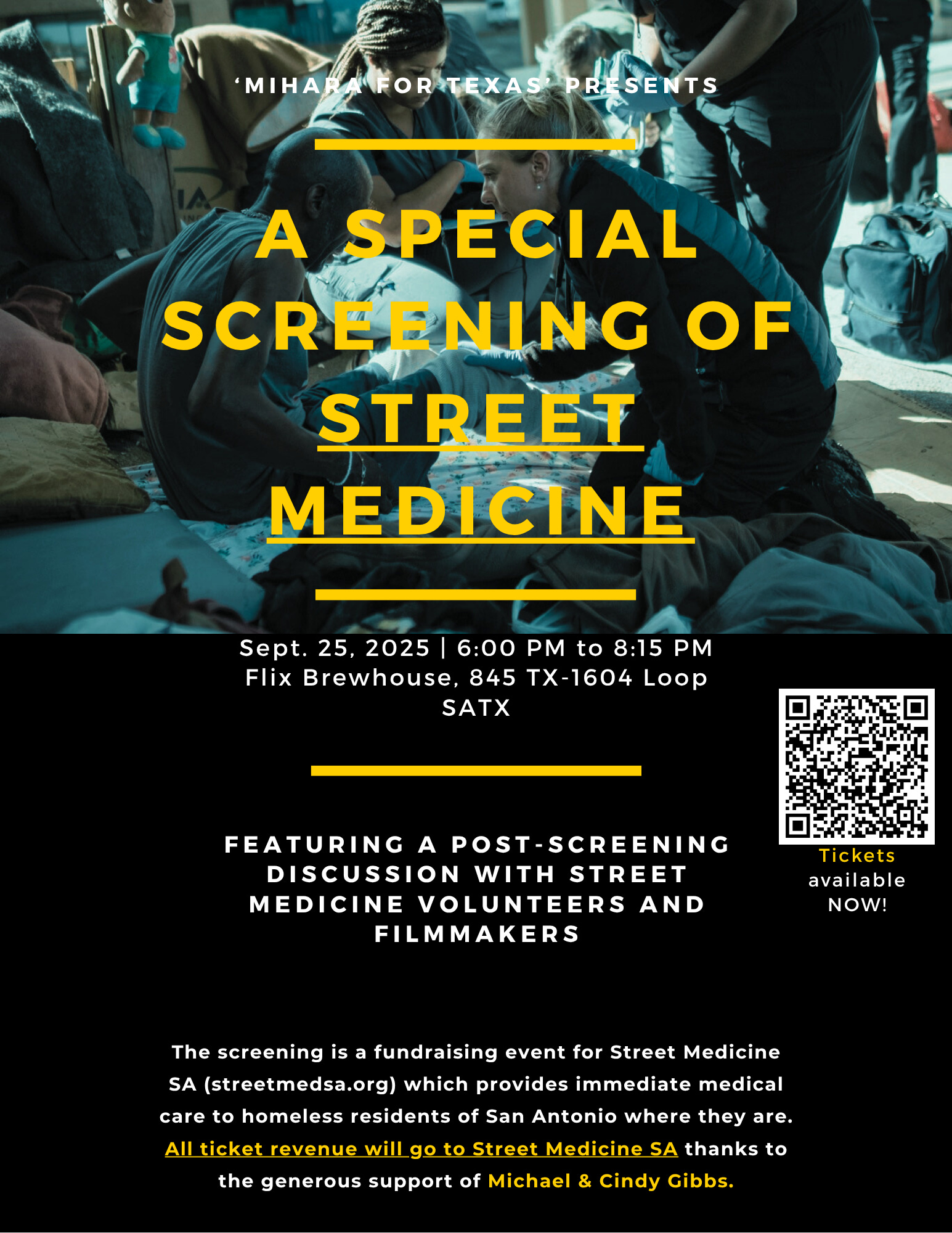
Join me at a special screening of Street Medicine on 9/25/2025 in San Antonio! All funds donated will benefit Street Medicine San Antonio (SMSA) and increase awareness of healthcare issues affecting the unsheltered.